Hello, I’m Giray.
Violinist, teacher, psychology student and martial artist.

Koç University · Psychology major
Business Administration double major · Media and Visual Arts minor
Koç University Orchestra · First Violin
ARSLAN CLASSICS · Founder & Artistic Director
Hello, I’m Giray.
I’m a violinist, teacher, psychology student and martial artist based in Istanbul. I spend most of my time trying to understand difficult things—music, people, discipline, beauty—and occasionally pretending that any of them can be fully understood.
Music has been at the centre of my life for years. I play first violin in the Koç University Orchestra, teach violin and music theory, and remain involved with several instruments whenever curiosity gets the better of my schedule. My relationship with the violin has been long, serious and occasionally argumentative. Intonation usually starts it.
I study psychology at Koç University, which gives a more respectable name to something I was already doing: observing people, questioning motives and examining perfectly ordinary experiences until they become unnecessarily complicated. I’m interested in what moves us—why certain sounds feel like memories, why beauty can be unsettling, and why the mind so often understands itself five minutes too late.
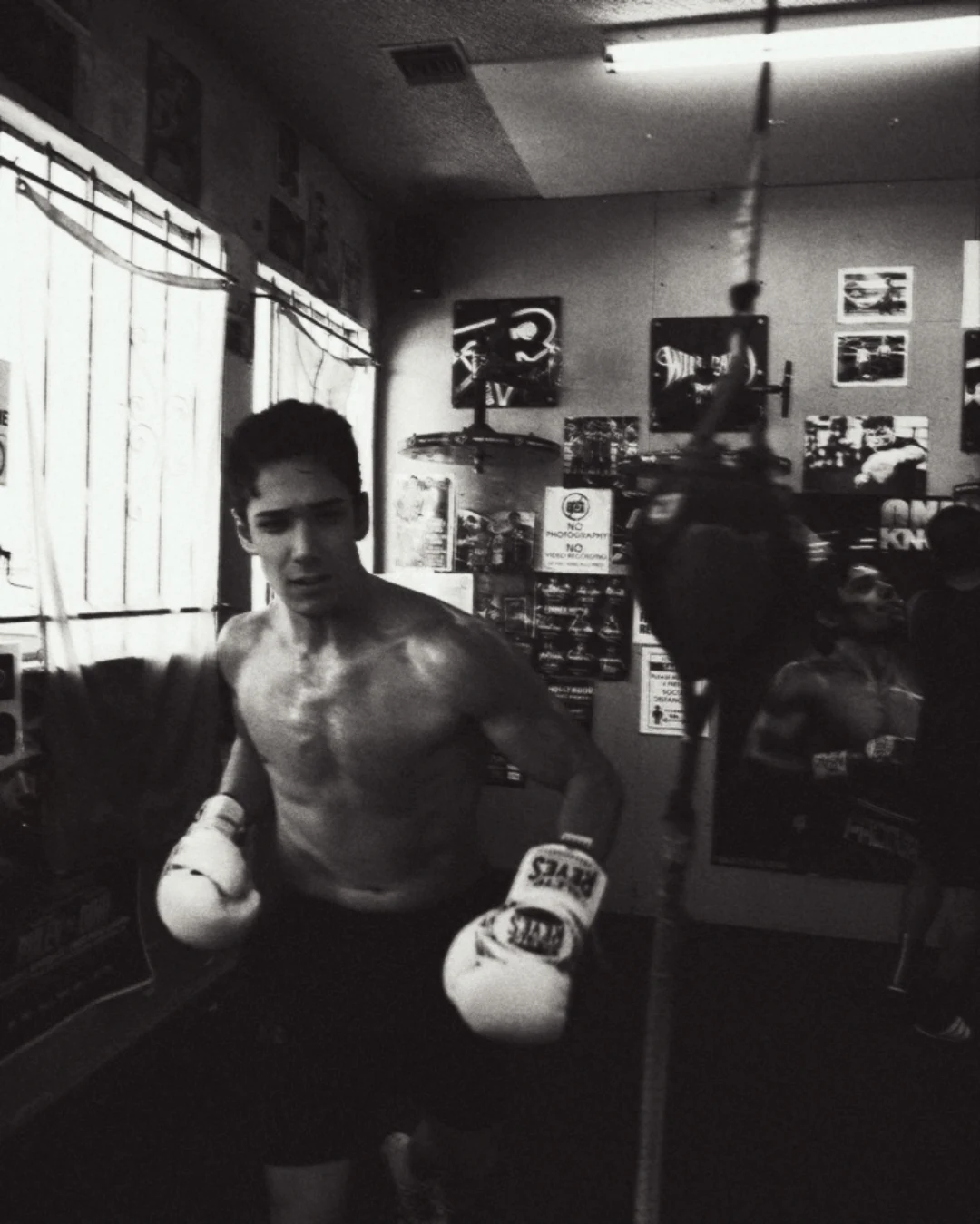
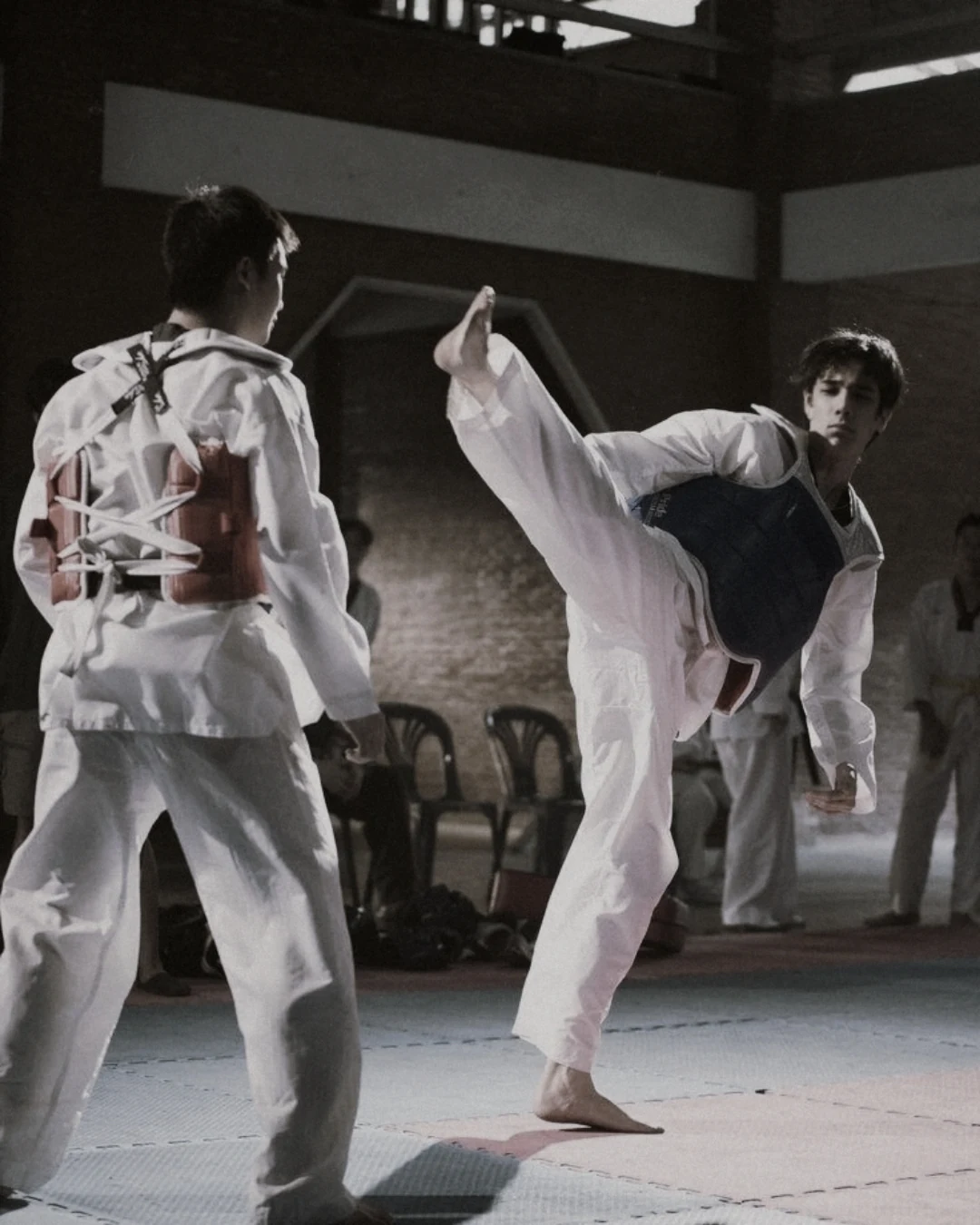
Away from music and university, I train in combat sports, including judo, boxing, Brazilian jiu-jitsu and Muay Thai. Music and fighting may look like opposite worlds, but both depend on rhythm, timing, composure and knowing precisely when not to force things.
This website is where all of those interests are allowed to meet. I write about classical music, jazz, psychology, art, aesthetics, philosophy, discipline and the more curious parts of being human. One page may contain Bach and counterpoint; another may involve Mitski, attraction, old poetry or an argument with a particularly stubborn chord.
Think of this place as part studio, part notebook and part ongoing conversation.
Have a look around. Read whatever catches your attention.
Perfect order is unlikely. Careful thought—and good rhythm—are not.
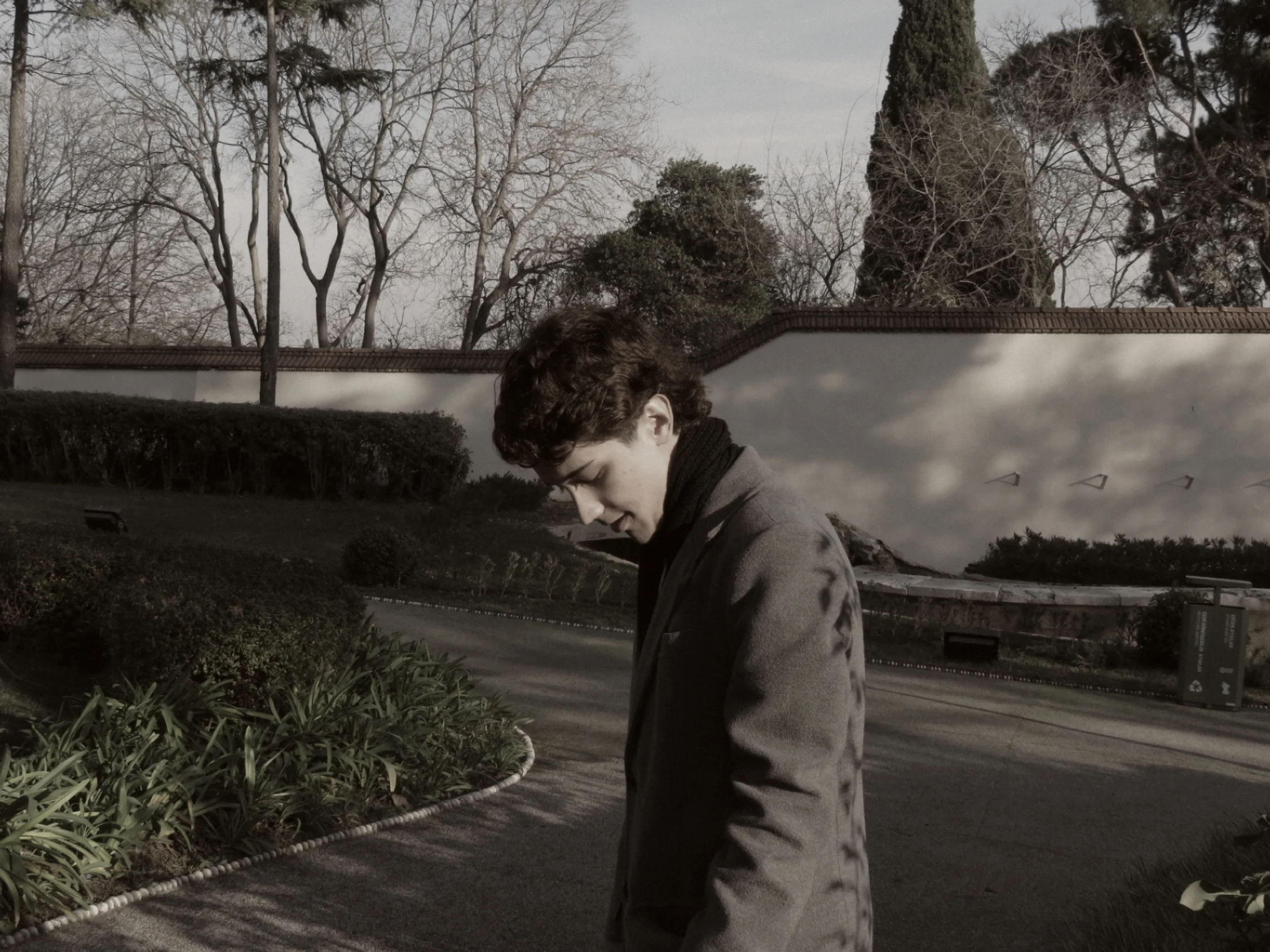
Who, Exactly, Am I?
I was born in Mersin, on Türkiye’s southern coast, into a household run by two English teachers. This meant that long before I had any serious thoughts about language, language had already developed serious thoughts about me. Incorrect tenses were corrected at the dinner table. Pronunciation mattered. Books appeared everywhere. I was, in effect, raised in the present perfect.
My family history reaches beyond the Mediterranean. On my mother’s side, there are Crimean Tatar roots shaped by migration from the northern Black Sea, along with a thread of Ukrainian and Slavic ancestry. I grew up Turkish, unmistakably so, but with the quiet awareness that family identity is rarely contained by one border. It travels through accents, recipes, faces, half-remembered stories and the peculiar melancholy people inherit without knowing exactly where it began.
Mersin gave me the sea. I still suspect that living beside it permanently alters a person’s sense of rhythm. The horizon teaches patience; the light encourages drama. Even now, certain pieces of music return me there more quickly than memory can. Antonín Dvořák’s Violin Concerto in A minor is one of them. Something in its spaciousness and melancholy feels inseparable from sunlight breaking across water, from the strange sensation of missing something before it has even disappeared. I will almost certainly write far too much about that concerto one day. Consider this advance warning.
As a child, I was academically successful and physically incapable of behaving as though that made me sensible. I read constantly, performed well at school, climbed whatever furniture looked structurally ambitious and asked adults questions they would have preferred to postpone for several years. I might finish an exam early and spend the remaining time planning how to irritate the teacher without invalidating the result. Education was serious. Taking myself seriously was optional.
That mixture has stayed with me. I am drawn to discipline, systems and technical precision, but I distrust anything that becomes lifeless through excessive reverence. I want to understand how things work, then see how far they can be stretched before they lose their form.
My first real encounter with art was not particularly dignified. There was a girl.
We were in middle school, separated by a few desks and the full emotional incompetence of early adolescence. Very little happened in objective terms. We exchanged glances, perhaps a pencil, probably a few sentences that would look painfully ordinary in transcript form. In my imagination, however, the affair had acquired the scale of an Ottoman romance. Every math lesson contained subtext. Every accidental look became evidence. At thirteen, one does not require much raw material to construct an epic.
That innocent, slightly ridiculous attachment opened a door. I began reading divan poetry: Fuzûlî, Nâbî, Nedim and the poets who could turn one glance, one absence or one unanswered hope into an entire metaphysical climate. Their language was intricate, musical and gloriously disproportionate. They did not merely experience sorrow; they gave it architecture, dressed it in silk and taught it to scan in metre.
Fuzûlî wrote, “Aşk imiş her ne var âlemde,” declaring love to be the substance of everything in existence. I was thirteen and therefore in no condition to interpret this responsibly.
Soon I was trying to write poetry in aruz metre myself. What attracted me was not only the emotion, but the discipline beneath it. Aruz makes every syllable accountable. A line may sound effortless, but its balance depends on exact weight and duration. It taught me an idea that later became central to how I understand art: feeling becomes more powerful when it is given form. Emotion alone can be sincere, but structure allows it to endure.
Turkish classical music entered through the same door. Makam was not simply a system of scales; it was a grammar of direction, tension and emotional shade. A makam did not merely provide notes. It suggested how a phrase should travel, where it might hesitate, what kind of ache it was permitted to carry. I trained my ear, studied with musicians who could spend an hour refining the character of a single pitch and learned that ornamentation is meaningful only when the line beneath it remains honest.
That was my first artistic language: Turkish, Eastern, ornamented, emotionally direct but technically controlled. I was formed by makam, aruz, old poetry and the particular dignity with which Turkish art can speak about longing without attempting to cure it.
Then Franz Liszt arrived and caused considerable administrative disruption.
I first heard La Campanella while sitting in front of a screen, only half paying attention. Within seconds, the piano had ceased to sound like a piano. The high notes flashed, the runs seemed physically implausible, and every phrase carried the confidence of someone entering a room through the window despite the door being perfectly functional.
My response was not simply, “This is beautiful.”
It was, “What on earth is happening?”
That question has shaped most of my life. When I encounter something beautiful, complicated or slightly inaccessible, admiration is never enough. I want to open it, examine its machinery and discover why it has affected me. Where is the emotion located? Is it in the harmony, the timing, the proportion, the expectation being created and then betrayed? What makes one gesture inevitable and another merely decorative?
I approach music this way, but also people. Psychology, composition, poetry and combat all attract me for a similar reason: each contains a visible surface and a less obedient system underneath it.
After Liszt, I turned sharply towards Western classical music. Makams became modulations; usûl met counterpoint; the inward melancholy of Turkish classical music found itself sharing space with Bach, Beethoven, Schumann, Paganini and the extravagant nervous system of nineteenth-century Romanticism.
Bach, in particular, became an obsession. His music offered a kind of authority I had not encountered before. Every voice seemed independent, yet nothing was accidental. Emotion did not interrupt logic; it emerged from it. A fugue could be mathematically rigorous and still sound as though it knew something private about grief.
I began studying harmony, form, counterpoint and voice-leading with the intensity usually associated with either religious conversion or an impending examination. There were periods when I practised the violin for eight or nine hours a day, working through Kreutzer, Schradieck and Ševčík, repeating shifts until the movement became cleaner than the thought that initiated it. The fingers hurt. Intonation remained unforgiving. Four difficult bars could consume an afternoon and still appear the next morning wearing the expression of someone who had never met me.
I loved it.
The violin became less an object than a diagnostic instrument. It revealed fatigue before I admitted it, hesitation before I understood it and vanity almost immediately. You cannot conceal much from a sustained note. If the bow lacks conviction, the sound reports it. If the left hand is tense, the instrument has no loyalty to your excuses.
At the same time, another part of my life was being formed through sport. I competed seriously in judo and tennis. The contrast with music was useful. In a practice room, I could spend an hour debating the moral character of a phrase. On a judo mat, somebody was attempting to throw me onto the floor. The hierarchy of immediate concerns became refreshingly clear.
Combat sport taught me commitment. A technique performed halfway is rarely elegant and occasionally painful. Tennis taught me to remain alone inside a point. There is no ensemble to hide behind, no conductor to blame and no section partner with whom to exchange a meaningful look. There is only the ball, the opponent and the unsettling possibility that your entire emotional state may be determined by an object weighing less than sixty grams.
Music trained precision. Sport trained decisiveness. I needed both.
Then came the drums, followed almost immediately by jazz and a period of theoretical embarrassment.
Jazz initially felt like entering a conversation halfway through, in a language I had technically studied but never heard spoken at full speed. Classical harmony had given me rules, functions and carefully named expectations. Jazz handed me a chord symbol resembling an insecure password and expected me to react in real time.
I was fascinated and irritated, which is usually how my more serious interests begin.
Gradually, I understood that jazz was not the absence of order. It was order made mobile. Its discipline appeared in listening, timing, harmonic awareness and the ability to make a decision without first drafting a philosophical defence of it. A wrong note played timidly remained wrong. Played with awareness, rhythm and consequence, it might become a direction.
That changed how I thought about music. Classical training had taught me to prepare. Jazz began teaching me to respond.
By high school, my life had become crowded enough to require either exceptional organisation or a minor collapse. I moved away from home to attend a strong school and learned the practical rituals of independence earlier than I had expected: budgeting, cooking, managing schedules and pretending that I understood what I was doing.
I supported myself partly by teaching violin, music theory and ear training. Teaching began as a practical necessity and became one of the most important parts of my musical education. Explaining a concept exposes every weakness in your own understanding. It is easy to perform something through habit. It is much harder to explain why the movement works, why a phrase needs direction or why a student’s intonation problem begins several seconds before the note actually goes out of tune.
I have never believed in teaching students to reproduce correct sounds without understanding them. A technically accurate performance can still say nothing. My aim has always been to connect mechanism with intention: how the hand moves, what the ear expects and why the phrase deserves to exist in the first place.
The same instinct led me to teach mathematics. I took part in mathematics-olympiad preparation, sat the TÜBİTAK examination and developed a lasting affection for mathematical reasoning. Mathematics has a clarity that human beings often lack. An argument works or it does not. A hidden assumption can be exposed. A complicated problem may collapse through one elegant observation.
Students often believe they are “bad at mathematics” when what they actually possess is a collection of poorly explained foundations and several years of accumulated fear. Watching that fear disappear when the structure finally becomes visible is one of teaching’s quieter pleasures.
At seventeen, I developed a research project titled The Effect of Classical Music on Human Intelligence and formally submitted it to TÜBİTAK. It was ambitious, imperfect and entirely characteristic of me. I wanted to examine whether different composers might influence attention, anxiety, sleep or cognitive performance in different ways. Bach, Liszt, Debussy and Schumann appeared not merely as artists but as psychological environments.
What I was trying to establish, perhaps too eagerly, was that music does things. It is not decorative sound placed around life. It shapes arousal, memory, expectation, attention and emotion. The project stood somewhere between music theory, speculative psychology and autobiography, with graphs included to make the feelings look properly supervised.
The Turkish university entrance examination eventually arrived, as large national examinations tend to do, carrying the atmosphere of an approaching natural disaster. I studied for it with the exhausting concentration familiar to students across Türkiye and ranked 1,116th nationally, earning a place at Koç University.
Reaching Koç mattered because it gave me room to breathe. For years, achievement had felt tied to a continual argument for my own legitimacy. Admission did not end ambition, but it loosened something. For the first time in a long while, effort could become exploration rather than proof.
I now study psychology, a discipline that suits my lifelong suspicion that the human mind is both astonishingly sophisticated and alarmingly unreliable. Psychology gives formal language to questions I had already been asking through music: How do people organise experience? Why does expectation alter perception? How much of identity is memory, habit, performance or defence? Why do otherwise intelligent people send the messages they send after midnight?
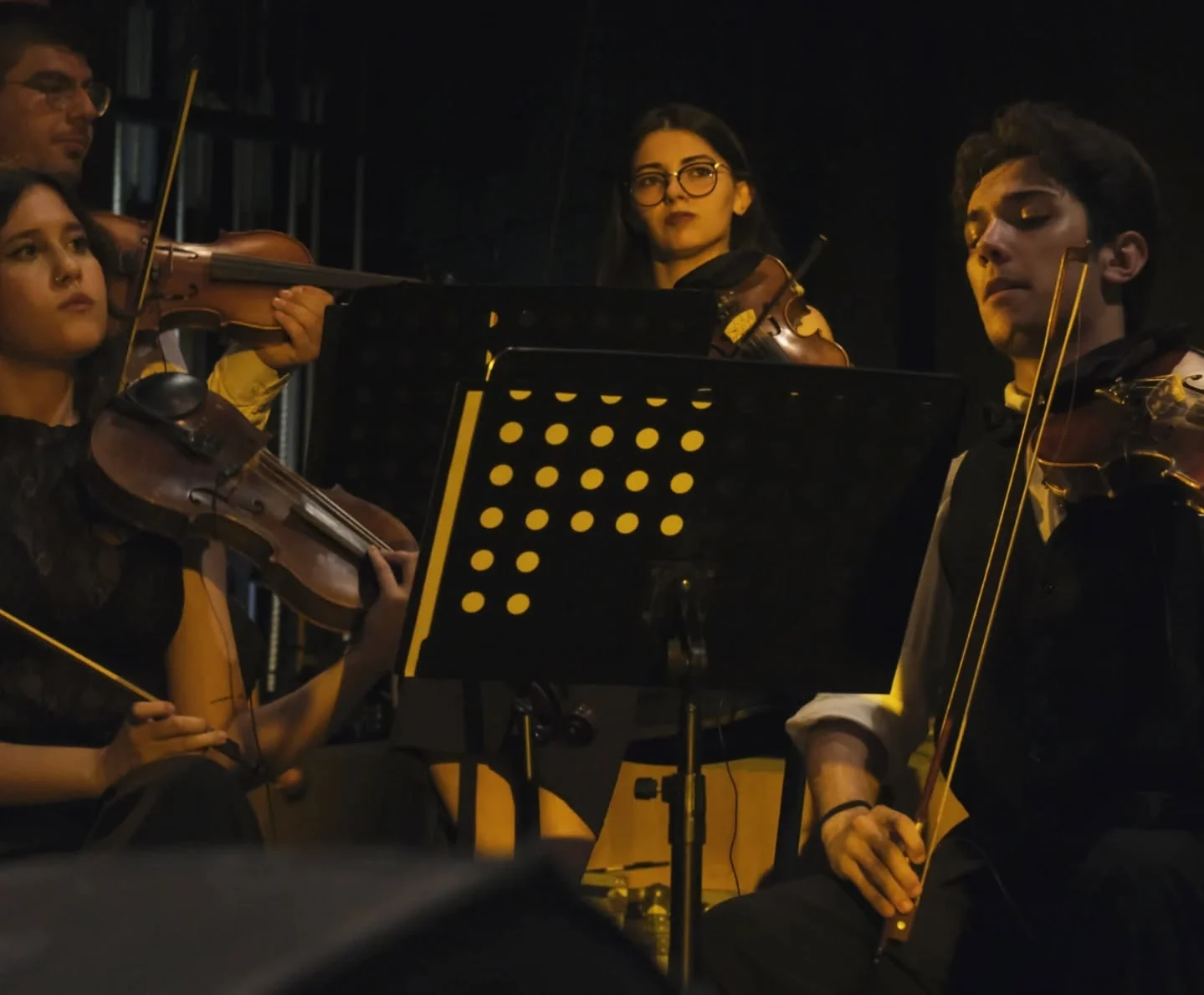
At Koç, I also play first violin in the university orchestra. Ensemble playing remains one of the few experiences in which discipline and surrender occur simultaneously. You must know your part, control your sound and enter with confidence, yet remain flexible enough to become part of a larger motion. Leadership in music is not a matter of playing louder. It is the ability to offer enough clarity that other people can move with you.
My musical life has continued to expand. Jazz is no longer the suspicious underground establishment I once observed from the doorway. It has become central to how I listen and think, especially through modern fusion, complex harmony, groove and improvisation. Drumming gives me a physical relationship with time that the violin does not. Rhythm is no longer something beneath the melody. It is a form of intelligence in its own right.
I have also played with the post-rock band Bilinç Akışı, making music built from long crescendos, repetition, noise and the emotional usefulness of refusing to arrive too quickly. Post-rock suits me. It can be restrained for several minutes, then suddenly behave as though the building has developed an inner life. It sounds rather like the contents of my mind at three in the morning, except better mixed.
Sport has remained just as important. Judo was never a childhood episode I politely abandoned. At university, I added Brazilian jiu-jitsu, boxing and Muay Thai to the conversation. Combat strips away abstraction. Whatever theories you have about calmness, endurance and self-control become testable once another person is actively preventing you from breathing comfortably.
There is humility in that. Also bruising.
Alongside music, psychology, teaching and sport, I have worked in modelling. It appears, at first, to belong to a different life, but I do not experience it that way. Modelling involves line, posture, timing, restraint and the communication of character without explanation. In that sense, it is closer to performance than people assume. A camera notices uncertainty almost as quickly as a violin does.
From the outside, these interests may look scattered: divan poetry and jazz fusion, Bach fugues and Muay Thai, mathematical reasoning and modelling, psychology and aruz. To me, they belong to the same project.
Each asks what can be achieved through attention.
Music turns sound into structure. Poetry turns emotion into language. Mathematics turns confusion into proof. Psychology turns behaviour into questions. Combat turns hesitation into consequence. Teaching turns private understanding into something another person can use.
I have never believed that a coherent life must be a narrow one. Coherence does not mean doing only one thing. It means discovering the principle that connects the things you cannot stop doing.
For me, that principle is the transformation of chaos into form.
Sometimes the form is a sentence. Sometimes it is a fugue, a violin phrase, a lesson, a combination on the heavy bag or the decision to keep one’s composure when instinct suggests otherwise. The material changes. The demand remains: pay attention, understand the structure, remove what is false and do the thing with enough precision that it begins to feel inevitable.
I am still learning how to do that.
I am still studying, practising, writing, teaching, fighting, listening and revising. I have not arrived at a final version of myself, and I hope I never become foolish enough to believe that I have. A life should possess structure, but it should leave room for modulation.
So, who exactly am I?
A Turkish musician shaped by the Mediterranean and the Black Sea; by makams and counterpoint; by poetry, mathematics, competition and curiosity. A psychology student who trusts the violin more than most questionnaires. A teacher who dislikes empty memorisation. A fighter who knows that control is not the same thing as stiffness. A chronic overthinker slowly learning that some decisions must be played before they can be analysed.
Everything else is still being composed.